Turned a Liberia observation into Africa's first certified multi-light solar system.
Solo-founded, venture-backed. We built BrightBox, a roughly $100 solar home system a local electrician could repair with parts from the next town over. The field kept telling us the same thing: people wanted what electricity actually feels like. Lights on the ceiling, a switch on the wall, grid-level brightness, a phone charged at home. So we built for that. It became the best-selling solar home system on Kenya's competitive market, around 25,000 deployed, with partners from Coca-Cola to Schneider Electric to Kiva.
Three cost curves were collapsing at the same time: LED lighting efficiency, solar panel prices, and lithium-ion battery energy density. Put together, they made it possible to build a household solar system for about $100 that five years earlier would have cost thousands.
Most of the incumbents in African off-grid hadn't priced this in yet. They were still selling larger systems through NGOs and government tenders, a model that worked while the systems were expensive. Once the new economics put solar within reach of households and kiosk owners who could buy outright or on short-term financing and pay it back in months, that model was the wrong one.
One Degree didn't start out as a venture-funded company. It started as a side project I ran while consulting on health and energy work. We sold a small number of units to NGO partners, learned what worked, and gathered field signal. The pivot to full-time happened in 2012 when nurses we'd sold to in Liberia started telling us their friends were asking where to buy the product in local markets. That changed everything. The pull was coming from ordinary buyers in local markets rather than institutions, so we switched the model to local resellers and distributors, and the company became fundable.
BrightBox: designed for the Rift Valley, not for a trade show.
Before we designed anything, we did more than 200 interviews across seven countries. Kiosk owners in Nairobi, farmers in rural Ethiopia, market traders in Ghana. Two findings shaped everything that came after.
The first ran against the development consensus. When we asked what people wanted powered, they described the experience of having electricity. Lights hanging from the ceiling, switched on at the wall. Brightness that matched what the grid gave people in town. A phone charged at home, then a TV or radio. The sector was pouring money into solar lighting as a charitable good, a lantern handed out through an NGO, a product that sits on a table and reminds you every evening that you don't have power. We built BrightBox around what people described: ceiling-mounted lights, wall switches, grid-level brightness, phone charging, and enough headroom to run a television.
The second was about trust, and it became the design brief.
In more than 90% of our interviews, when we asked what brand people most wanted to own, the answer was Toyota. Toyota came up because it was the most reliable, the easiest to service, and had parts available in every town.BrightBox field research · 2012
BrightBox needed to be the Toyota of solar: the system on the market most likely to still be working in five years. Serviceable by a local electrician, built from parts you could source locally, and architected so a village repair shop could keep it running for years.
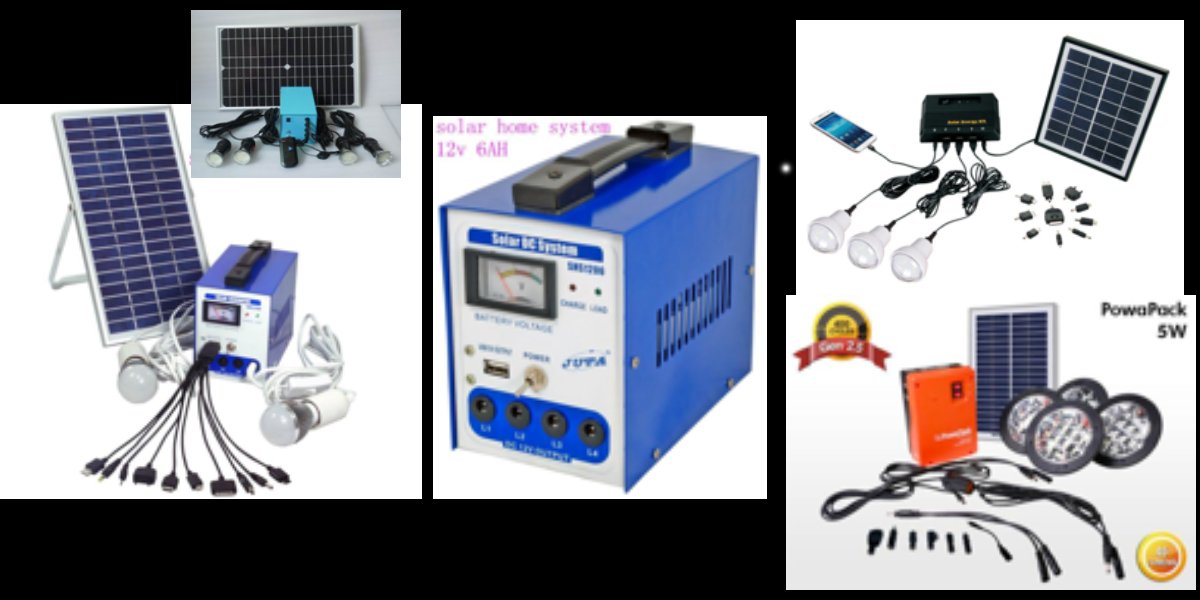
The research produced specific design decisions you wouldn't make from a desk:
Weight signals durability. Customers consistently preferred heavier products. Heavier felt more solid, more valuable, less likely to break. When we moved to lithium-ion and the system got lighter, we seriously considered adding a rubber weight to preserve the perceived-durability signal.
Port separation matters. Competing products put all ports on one side, which made cable management a mess during daily use. We split daily-use ports to the front and install-once ports to the back, with right-angle connectors so cables tucked cleanly against the wall.
Measure the actual cable runs. Customers told us they needed seven meters of cable to reach from a wall-mounted panel to a table lamp. We went into their houses and measured. They needed eight. Competitors were shipping five. That one detail caused a meaningful share of failed installations in the category.
Bright packaging beats sleek. Dark packaging looked premium in design mockups but disappeared on a dusty retail shelf in rural Kenya. Orange packaging that matched the product stayed visible.
Language follows the product. Focus groups called competing products "solar lanterns," a category word. They called BrightBox "stima," the Swahili word for electricity. That told us the product was in a different mental category than the competition.
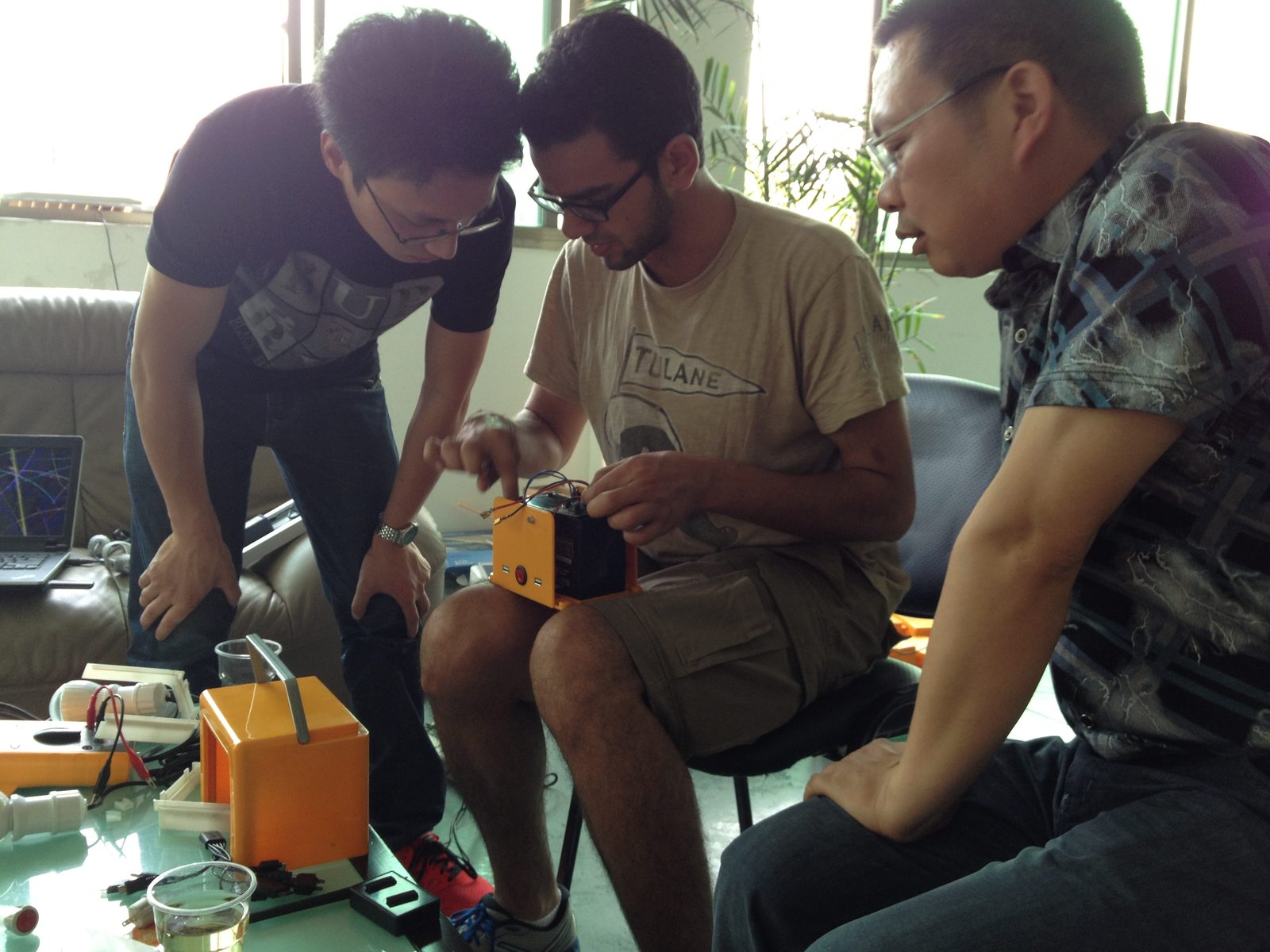
From concept sketches to 3D printing, to factory floors in China where I spent a lot of time in person, BrightBox went through three product generations: v1 with a repurposed motorbike battery, v2 with a lithium-ion BrightBox Plus, and a 2016 range. Across all of them we deployed 25,000+ systems serving more than 200,000 people. Design partner: Catapult Design. Product patented.
Alongside BrightBox, we sold roughly 20,000 single-light solar lanterns through the same distribution. A simple product, useful for reaching customers at lower price points and as a gateway to BrightBox upgrades. Total deployment across both products is what got Coca-Cola and Schneider to take us seriously.
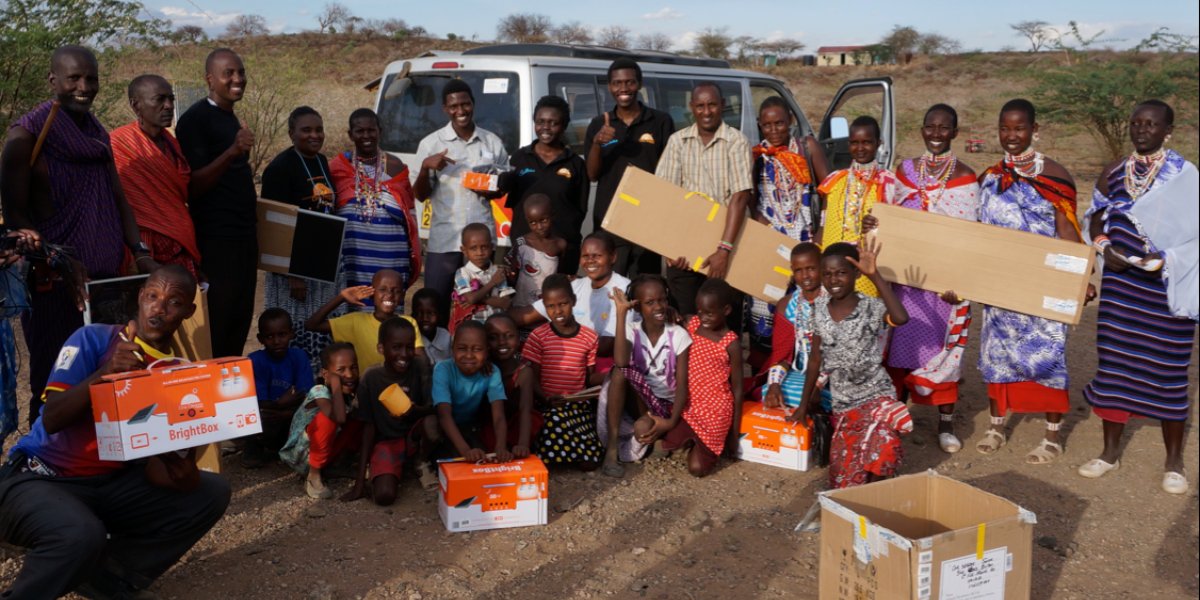
BrightBox became Africa's first certified multi-light solar system. Meeting those international quality standards opened doors a small Nairobi startup couldn't have opened otherwise.
First pico-solar company to partner with Coca-Cola, after years of competitor attempts.
Coca-Cola's branded metal kiosks sit in the most remote towns and the busiest cities across Africa. In Western Kenya, where ODS started, over 70% of small businesses relied on candles, kerosene, or disposable batteries for lighting. Those kiosks were Coke's last mile. Electrifying them made straightforward commercial sense for Coke.
I personally interviewed a dozen kiosk owners in Nairobi. Two-hour site visits. We delivered a BrightBox and watched how they used it. 90% used candles or kerosene inside the shop at night. Eye irritation and fumes were universal complaints. Most who had tried solar before had been burned by a product failure with no way to reach the supplier afterward.
From there I built a structured field survey, sharpened the methodology with Nielsen, and pitched the business case to Coca-Cola corporate in both the US and Africa. We got the order.
The pilot went to 100 kiosk owners. Nielsen ran the independent post-pilot research. Weekly energy costs dropped 90%. Weekly sales rose 15%. Coca-Cola committed to scale from 100 to 2,000 kiosks and made ODS a preferred vendor. The international press coverage that followed led directly to our first equity investment.
Since I received the Brightbox, I don't use candles anymore. I can open my shop for a few extra hours each day. Since I stopped using candles and kerosene, I save $15 weekly. This may not seem like much to big businesses, but to a small entrepreneur it's quite significant.Jemimah Njoki · kiosk operator, Kenya
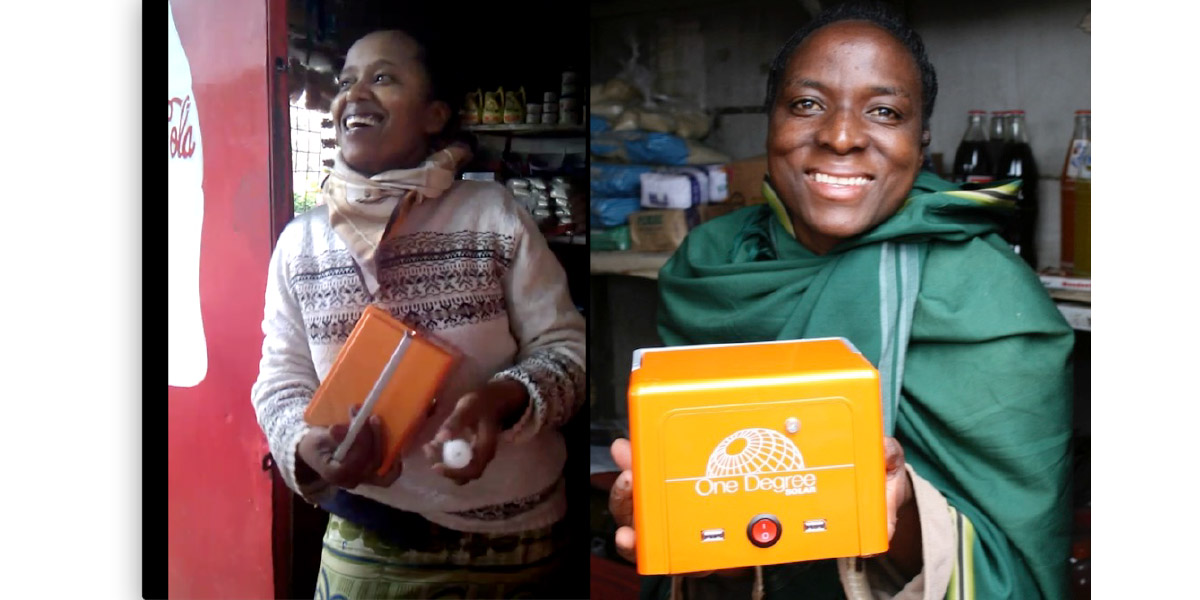
In 2013, Al Jazeera's earthrise came to Kenya and filmed an episode called "Solar Revolution." The first six minutes and forty seconds are One Degree Solar. Rift Valley villages, kiosks running on BrightBox, our team in Nairobi, and the wider story of cost-curve electrification in Africa.
After-sales service is the unsolved problem of African hardware. I built the software layer for it in 2012.
Customers who had tried solar before had usually been burned by the absence of any after-sales infrastructure. Product breaks, you can't reach the supplier. Warranties were paper-based. Complaints went into a void.
In 2012 I wrote a full RFP with customer storyboards and circulated it to dozens of mobile technology firms across Africa, India, and the US. We landed a partnership with Echo Mobile, a Kenya-based platform, who built the features at no upfront cost in exchange for a one-year exclusivity window. What we shipped: a paperless digital warranty that validated serial numbers against a master list, automated seasonal maintenance reminders by SMS, satisfaction surveys, customer segmentation, and a referral incentive program. None of that was standard in emerging-market hardware in 2012, and WorldWatch Institute, ICT Works, and Echo Mobile all recognized it as a pioneering model.
Operationally it meant we could tell when a product was failing before a customer complained, turn satisfied customers into referrers automatically, and track inventory across a 45-person distributed team. It turned hardware into a service business.
One product extension I'm quietly proud of is Headlamps for Health, built for community health workers making home visits after dark. Last Mile Health used them for tuberculosis patient visits in rural Liberia, in the same country where I'd first noticed the clinic-electricity problem six years earlier. Liberian community health workers using a product I'd built to address a problem I first saw while working beside them.
Distribution was the hardest problem, not the product. We could build a great solar kit. Getting it into 25,000 hands required Coca-Cola's logistics, Kiva's financing, Living Goods' field network, and hundreds of resellers across multiple countries. The hardware was the easier half.
And carrying a full P&L teaches things no other role does. There's a daily weight to making payroll, managing supply chain risk, pricing capital, and being the person everyone looks to when something breaks. I haven't done a role since where I didn't draw on that.
The company structure meant constant international travel: operations across East Africa, investors in France, manufacturing in China. Then in 2016 my oldest son was born early and spent a long stretch in the NICU. That reorders your priorities. I started thinking about healthcare innovation closer to home, work I could do from the US, near family, on a problem space that had just become a lot more personal than I'd realized.
That pointed me toward medical 3D printing and a company I'd been quietly watching for two years. I left One Degree Solar in early 2017.