Chief Program Officer → Chief Product Officer at a global startup accelerator.
I architected MassChallenge's pivot from generalist accelerator to five-sector platform, redesigned how we match volunteer experts with startups, and built the AI-native tooling layer underneath all of it from first principles. This is the chapter I'm still in, and I'm wrapping it up now.
A global accelerator looking for its next chapter, right as generative AI landed.
MassChallenge runs one of the largest early-stage startup accelerators in the world. 16+ years, 5,000+ alumni, thousands of mentor touchpoints. By early 2024, the organization was ready for a structural pivot. From generalist accelerator to a sector-focused platform built around five high-impact verticals: health, climate, sustainable food, financial inclusion, and security & resiliency.
The pivot resolved into a three-product architecture. Traction programs deliver sector-specific scale support to revenue-generating startups. Challenge programs are sector-specific innovation cohorts run with anchor partners. Custom engagements are bespoke partnerships with corporate, government, and philanthropic funders. The 15-year industry-agnostic Early Stage program was retired in 2025 once the three-product model was running on its own.
I joined as Chief Program Officer with responsibility for Programs, Community, and Marketing. Together that's about 40% of the organization's headcount and a $3M operating budget. The remit was to architect the pivot, redesign the founder and mentor experience, and rebuild the tooling layer underneath everything. I was promoted to Chief Product Officer in September 2025, after the marketing team of four to six was let go and I took the function over and rebuilt it around a single new hire reporting to me.
The timing suited something I'd been waiting to do. The cost curve for a non-technical team to build meaningful internal software had just collapsed, the same way LED and battery prices collapsed before One Degree Solar and desktop SLA printers collapsed before Formlabs. MassChallenge was a place where that unlock could matter in weeks.
Architected a generalist-to-sector-platform pivot across strategy, team, stack, and operating model.
Some of the pivot was structural. Most of it was operating discipline, and it applied the same way to three different things. Every program ran on a weekly cadence with named owners and an explicit handoff between Programs, Community, and Marketing at each stage. RESOLVE, our annual event, ran the same way: 249 registrants at Artists for Humanity in Boston, 4.6 stars across 58 reviews, and the partner started planning the next one before we finished debriefing this one. So did the platform rebuild at the end, which is now a cross-functional group meeting weekly under the CEO and Head of Engineering. Handoff work either compounds or it collapses, depending on how seriously you treat it.
The board also directed a parallel shift toward more mature startups. Companies with revenue, traction, and near-term capital needs, rather than pre-product concepts. 2025 cohorts represent $96M in collective revenue and $260M in funding. Roughly 2x prior-year totals.
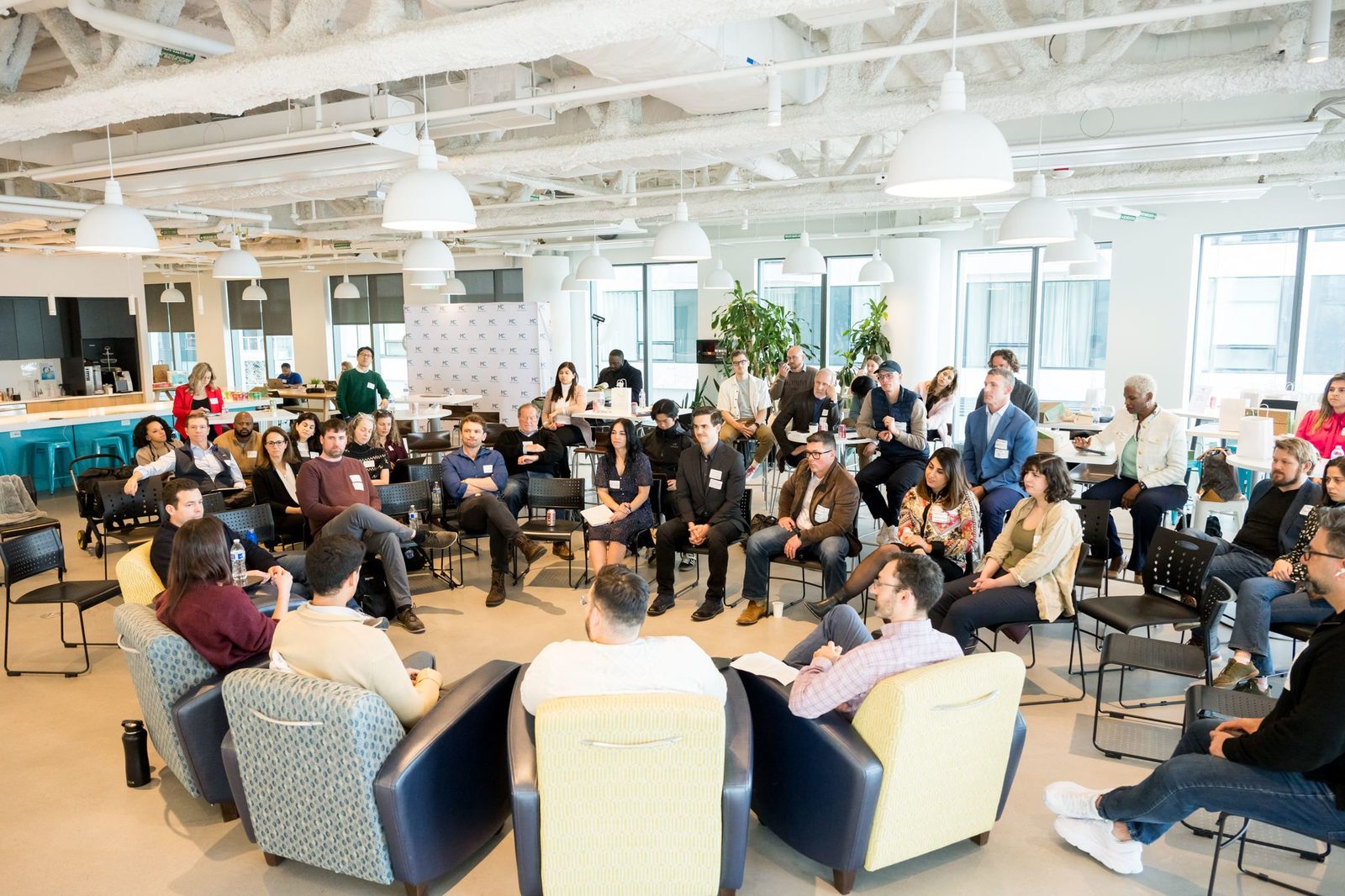
- Cohort design. One 130-startup generalist curriculum became sector-specific cohorts of 25 to 35 founders, each anchored by personalized mentorship and industry Experts in Residence.
- Standards. We set performance and commitment expectations for the first time, and removed teams that didn't meet them.
- The volunteer network. The Community team was given ownership of vetting and nurturing judges and mentors, which had never been anyone's job.
- The tools. Accelerate for applications, judging, and matching. MC Hub for program delivery and alumni engagement.
The results held. The flagship scored an NPS of 33 as a single generalist program. Rebuilt into three focused programs, it scored 74 in Health and Life Sciences, 61 in Security and Resilience, and 57 in Climate. Across all completed 2025 and 2026 programs, portfolio NPS weighted by startup count came to 73.6, up from 47.9 the year before I arrived. Startup CSAT 89%, mentor CSAT 84%, and a 100% industry-match rate across Challenge programs.
The sector pivot couldn't run without a coherent vocabulary underneath it. When I arrived, the org was matching mentors to startups and telling partners "we have N companies in your space" using twenty industry and expertise fields scattered across HubSpot, AXLR8, Airtable, and profile types. 97 industry values and 244 expertise values, nested three levels deep, in seven parallel taxonomies that didn't agree with each other. One value was a validation error someone had saved as a tag. On paper that's more than 23,000 possible industry-expertise pairings, which is another way of saying nothing could be matched or counted reliably.
Sixty days of stakeholder interviews and a field-by-field audit later, we collapsed it to three fields. A Primary Industry (7 values, the sector bets). A Secondary Industry (54 sub-sectors, each with a written definition and a list of relevant technologies). An Expertise tag (8 categories). One source of truth across systems, no nesting in production, and 40 pairings a program manager can actually hold in their head.
That spine is what made everything else possible. The 100% industry-match rate is a function of a taxonomy that holds. The seven-touchpoint CSAT framework can compare across sectors because the sectors are stable categories. The LLM sector classifier maps to these seven primary industries, which is why it could replace a keyword approach carrying a 26% error rate. Partner economics in the healthcare franchise depended on counting startups in a way the old data model couldn't support.
The most structurally important work was redesigning how MassChallenge captures, qualifies, nurtures, and places volunteer experts with startups. We call it the Network. At scale, an accelerator's real business is orchestration: matching the right mentor, investor, or operator to the right founder at the right moment. Mentor qualification was informal, matching was human-intensive and inconsistent, and placement data was scattered across tools. I redesigned the full lifecycle and built AI-native tools underneath to run it. This is the work most directly analogous to portfolio operations inside a venture firm.
The starting point was a legacy database of more than 30,000 volunteer contacts in the Accelerate platform. Judges and mentors had never been vetted, and there was no record of years of experience, sector expertise, or prior exits, which meant no way to match a founder to a relevant expert or to know whether a judge was qualified to score an application. We invited the full base to opt back in rather than assume consent, refreshed roughly 7,000 profiles, and vetted new applications by hand. The Community team manually vetted 1,005 in the last program year alone.
We ended with 1,594 vetted, active experts. A network about 95% smaller than the one I inherited, and every quality measure moved the other way:
- Expert satisfaction 89% against an 80% target.
- Outreach response rates up fourfold.
- Three personalized mentor matches per startup on day one of programming.
- Seven measured touchpoints across the founder journey, all holding above the 80% target.
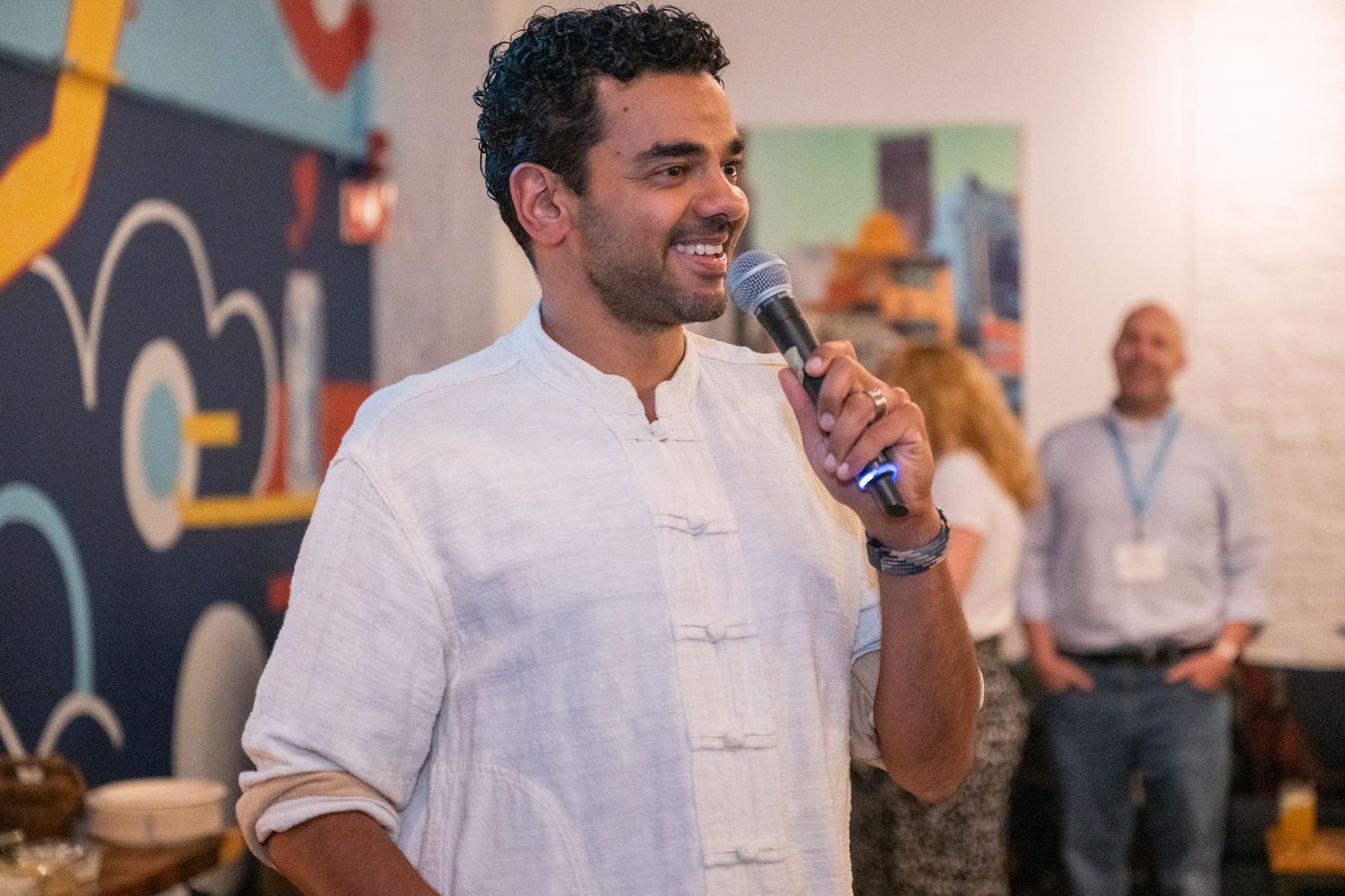
The Healthcare franchise is where the sector model proved itself first. I served as internal executive sponsor, using the six years at Formlabs to shape sector strategy across medtech, biotech, and digital health, with a health equity throughline. The franchise spans programs like BCBSMA HEBA, the Healthcare Challenge, and Traction Healthcare, with anchor partners including Lyda Hill Philanthropies and Breakthrough Biotech, and works across 10 partners and 75 startups.
Partner economics like this weren't available under the prior agnostic program model. They needed a real sector spine. Healthcare became the template the Climate and Security & Resiliency franchises were built from. Same pattern I'd seen before: pick the vertical with the clearest pain, build the proof point, let the pattern travel.
Building the AI layer in-house, as core operating infrastructure.
By 2024 I was building functioning AI tools inside MassChallenge instead of commissioning them. The stack is Python, pandas, React, Anthropic API, Netlify. The specific tools matter less than the stance: AI infrastructure is a core operating capability, and I wanted to be the person inside the organization who treated it that way.
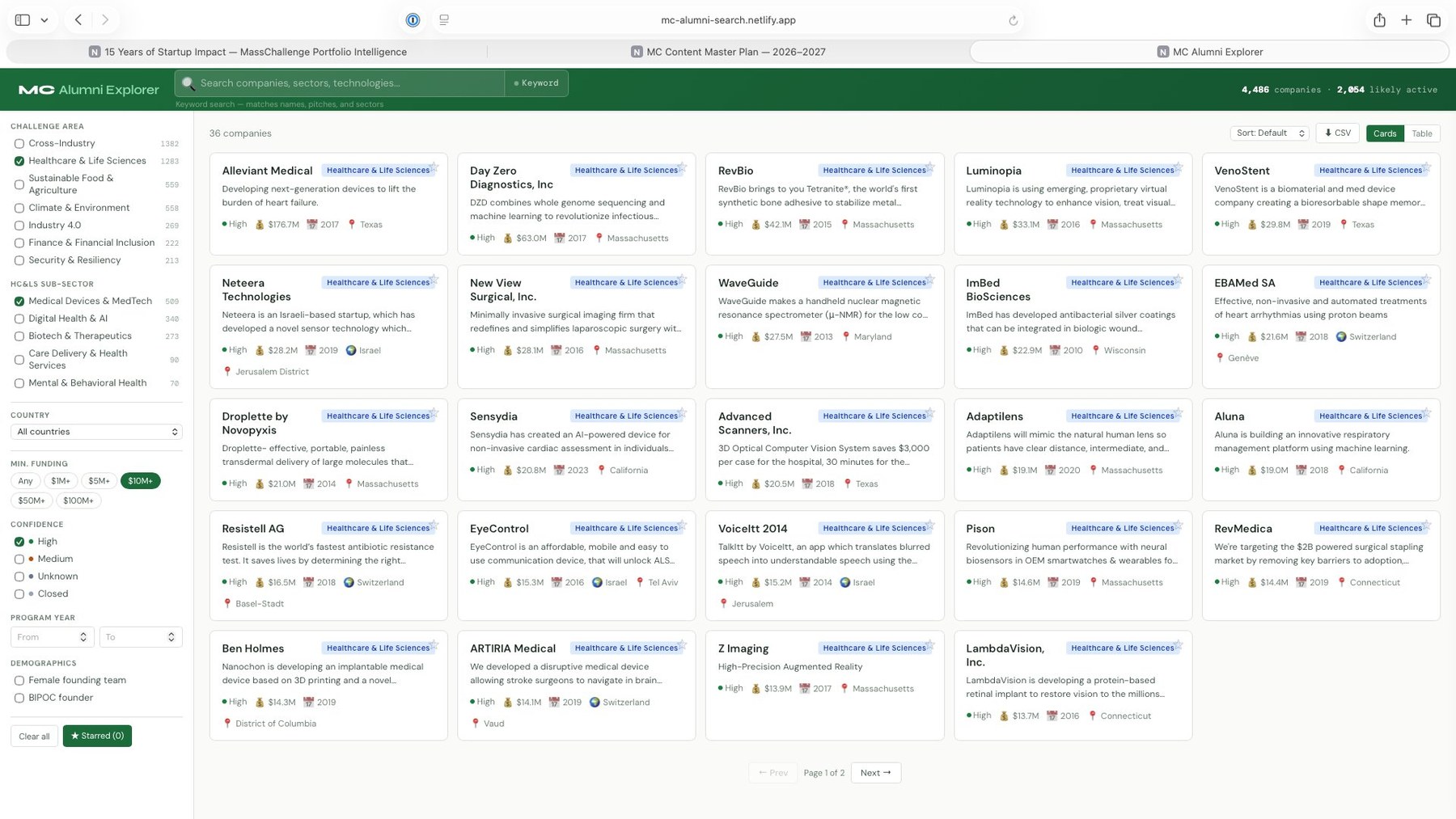
A full-stack search tool indexing all 4,486 alumni companies across 16 years, filterable by sector, geography, funding, program year, and founder demographics. Natural-language search handles the fuzzy queries: "companies that help people with special needs" returns 48 relevant companies ranked by relevance tier. Used daily by the Programs and Community teams.
Built for a 2025 gala honoring alumni who took an unusually long path to breakout. It scores every alumnus against one narrative filter, four or more years from program to a major funding milestone, and returns a ranked shortlist with the supporting evidence attached. Purpose-built for a single decision, shipped in days.
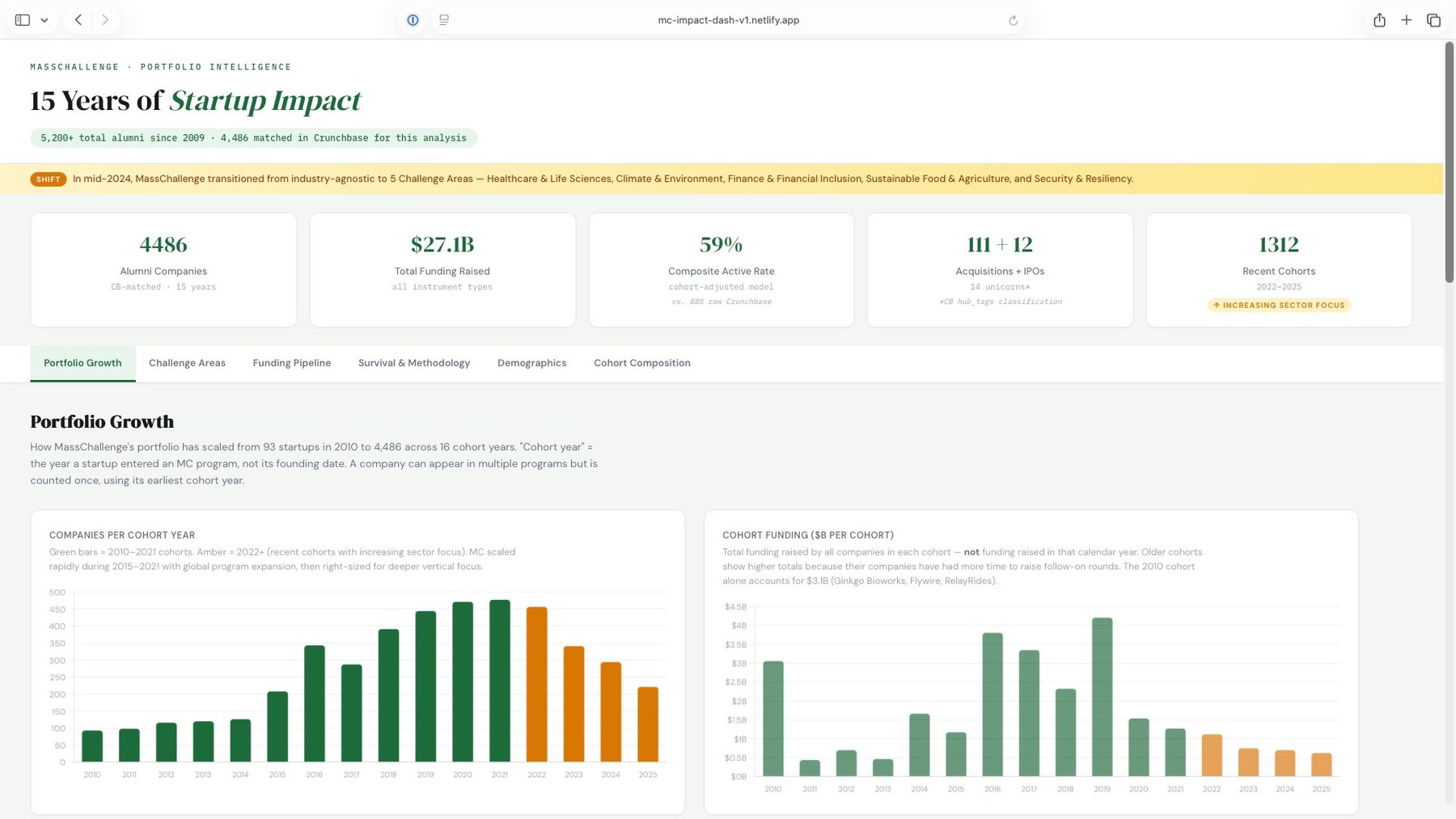
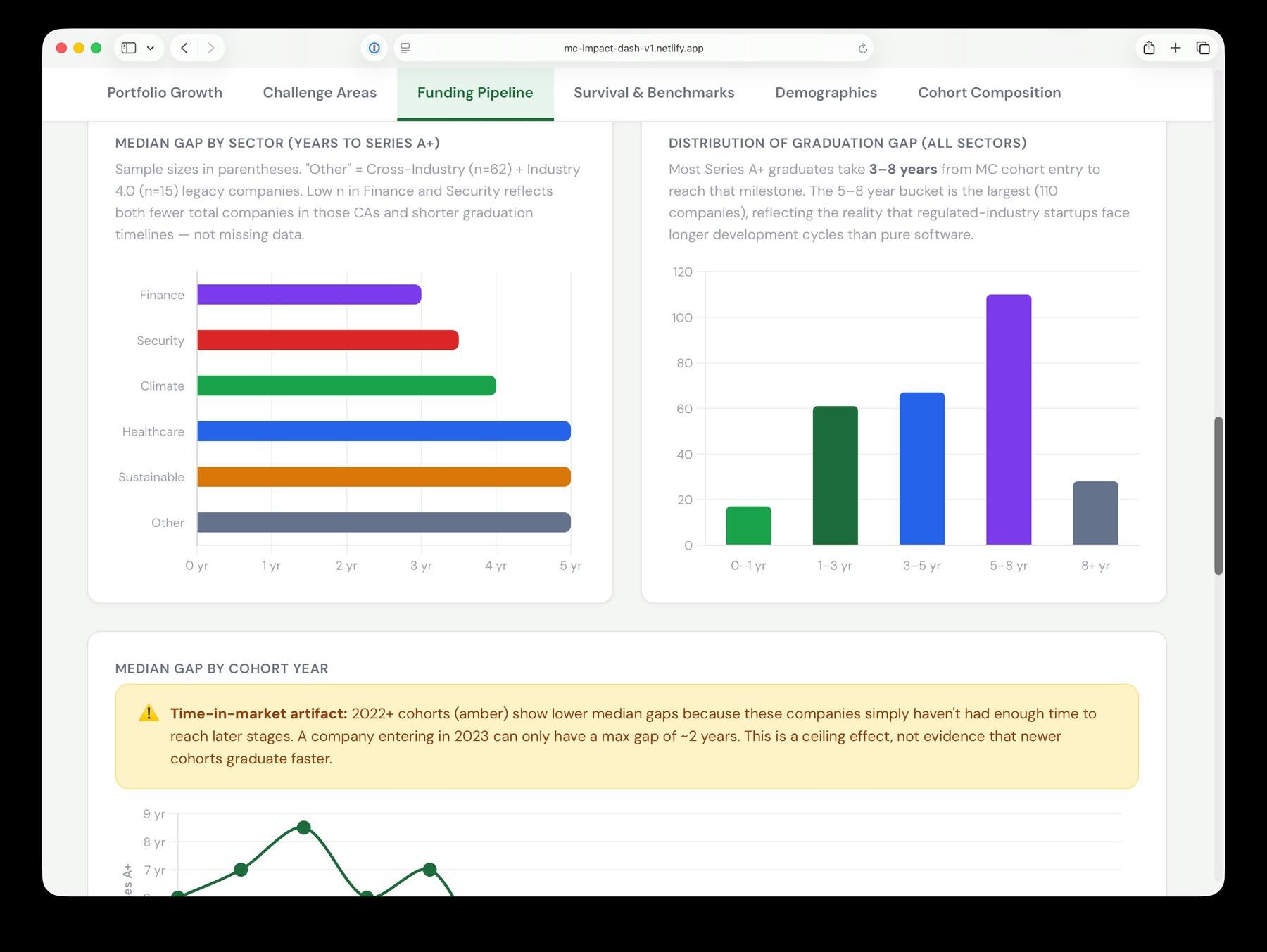
Fifteen years of portfolio data made queryable: $27.1B raised across 4,486 startups, 59% active, 111 acquisitions, 12 IPOs, 14 unicorns. Six tabs covering growth, Challenge Area composition, funding pipeline, survival benchmarks, founder demographics, and cohort dynamics. Built as internal strategy infrastructure and made publicly explorable at mc-impact-dash-v1.netlify.app.
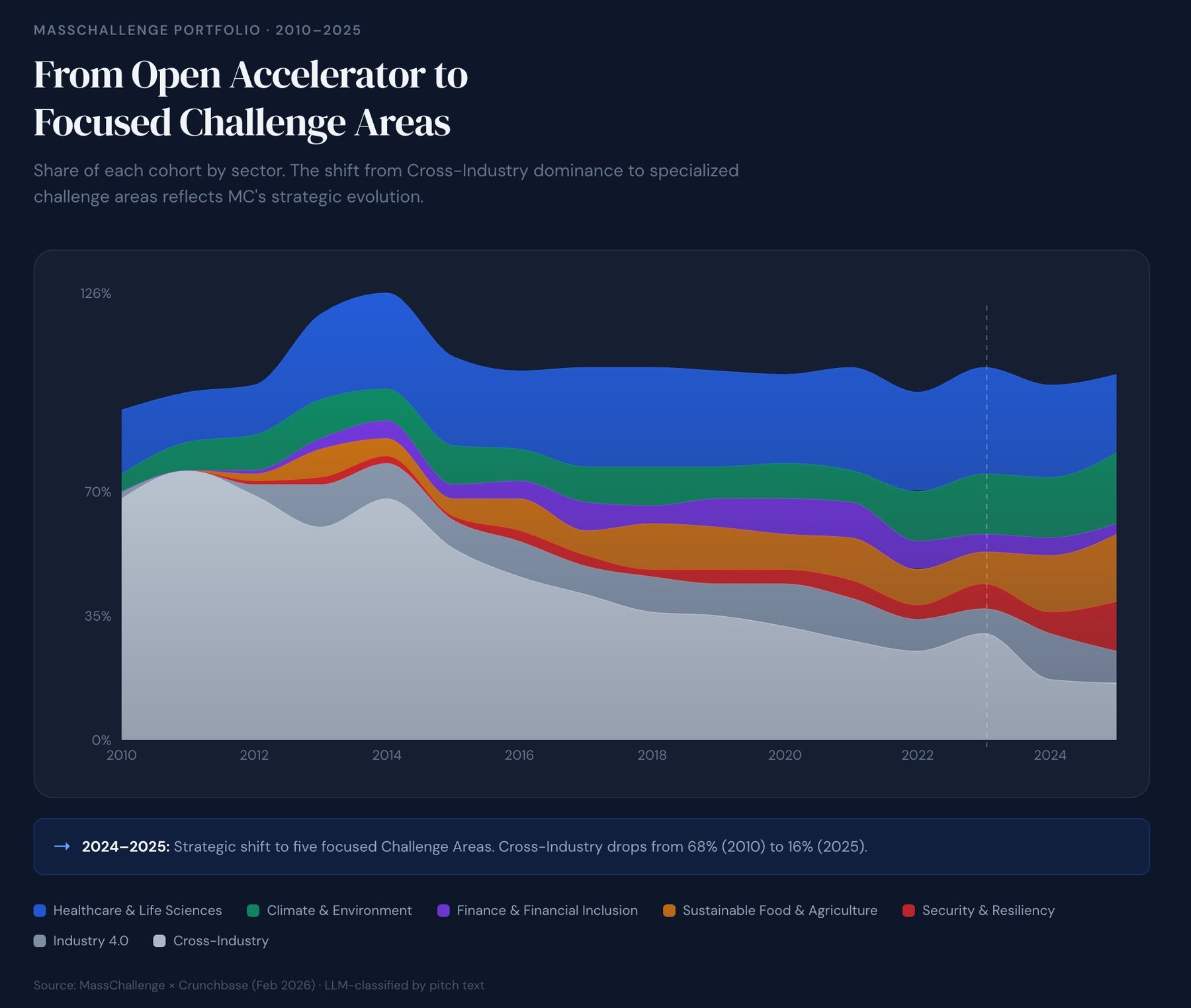
A five-part LinkedIn series turning the dataset into narrative: the pivot away from Cross-Industry dominance, the $20.6B sector breakdown, the power law in unicorn outcomes, and the time-in-market artifact that distorts short-term cohort metrics. Strategy material internally, positioning externally.
The accelerator was still running on software built in 2010, with an unofficial layer of other tools, Airtable among them, that people adopted to fill the gaps. Nobody decided on that architecture. It accumulated. The practical cost was that no single view answered "how is this cohort doing," and staff spent hours every week reconciling data between systems instead of working with founders.
Cait asked me to lead it: collect the business and user requirements, build the prototype directly, and advise on build paths. I ran requirements across every role that touches a program, applicants, judges, program managers, mentors, startups, and partners, then built the working prototype myself rather than writing a spec and handing it off. Seven role-scoped views, three program templates for the Traction, Challenge, and Custom shapes, and an AI layer that surfaces recommendations a human accepts, edits, or rejects. Nothing consequential runs without a sign-off.
My last two months went to this. The engineering team ran a hackathon against the prototype and took its code as the build reference, and a cross-functional team now meets weekly on it under the CEO and Head of Engineering, targeting production in the second half of 2026. It's MassChallenge product work, so the build itself isn't something I can share publicly.
- LLM sector classifier. The foundation layer, replacing a keyword approach that carried a 26% error rate and had made the database effectively unusable. The Explorer, the Dashboard, and the data journalism all sit on top of it.
- AI penetration analysis. A 2023-to-2025 cohort study using a four-tier taxonomy. 32.2% of the full cohort AI-native or AI-enabled, 57.4% of the software subset, and 69.9% of the 2025 software cohort, within ten points of Carta's benchmark. It informed the 2026 sector strategy and replaced a keyword scan that had returned a misleading number.
- AI content generation tool. Anthropic API and Netlify serverless functions, supporting content workflows across Community and Marketing.
- 2026 marketing framework. An Excel planning model paired with an interactive HTML dashboard, replacing what had lived in static slide decks.
What changed about the work, more than any single tool, is that AI infrastructure now sits inside my scope as an operator, the same way cloud infrastructure or analytics did a generation ago. Knowing what these tools can and can't do, and where they fit in an operating stack, comes from building them.
The data spine is the work I'd point to first if anyone asked what made the rest of MassChallenge possible. It's what lets mentor matching, sector cohorts, partner segmentation, and CSAT measurement hold together at the same time. The Network redesign is the piece I'm most proud of, because it's what founders actually feel. Placing the right person at the right moment is the core of what an accelerator does, and the redesign was built to make that happen consistently rather than by luck.
The AI builder work changed what my scope as an operator looks like. Shipping working tools rather than commissioning them changes which bets are feasible and how fast a lean team can move. That's the capability I'm most interested in carrying into whatever comes next.